
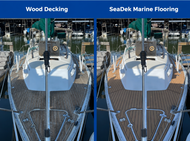
SeaDek vs Wood Boat Flooring: Classic Style or Modern Comfort?
posted by Erica Fisk on Jul 3rd 2026
Few decisions on a boat have as much daily impact as what is under your feet. The flooring you choose affects not only how the boat looks, but also how it feels after a long day on the water, how easy it is to keep clean, and what it costs you over the years.
For centuries, if not millennia, the answer was pretty simple. Wood boat flooring, specifically teak, was the only option. Even to this day, it still has plenty of devoted followers, and we see that as a good thing - as boaters ourselves, we place great value in tradition.
But over the past decade or so, SeaDek has earned a serious following of its own as a modern alternative built specifically for the marine environment, also with good reason. Through this article, we explain why.
A quick caveat: this certainly isn't a piece arguing one is better than the other. Both wood boat flooring and SeaDek marine flooring are great options for different reasons. The right answer depends on what kind of boater you are.
Let's take an honest, impartial look at each. But first, the basics.
What Is Traditional Wood Boat Flooring?
When most people picture wood boat flooring, they picture teak, and there's a reason for that. Teak has been the marine flooring of choice for centuries, prized for the natural oils that make it remarkably resistant to water, rot, and the marine fungus that destroys lesser woods.

It isn't the only option. Iroko and sapele both appear as more affordable hardwood alternatives, and plantation teak has become common on production boats.
Still, a real teak deck remains a hallmark of luxury yachts and classic vessels. The unique grain pattern in each board and the warm tones that silver into a soft patina are part of why teak has held its place for so long. There's a feeling of standing on something milled rather than molded that synthetic materials often (but certainly not always) struggle to match.
What Is SeaDek Marine Flooring?
SeaDek is a closed-cell PE/EVA foam flooring engineered specifically for marine environments. The closed-cell construction means the material doesn't absorb water, which resolves a list of common deck problems like mold and rot before they have a chance to start.
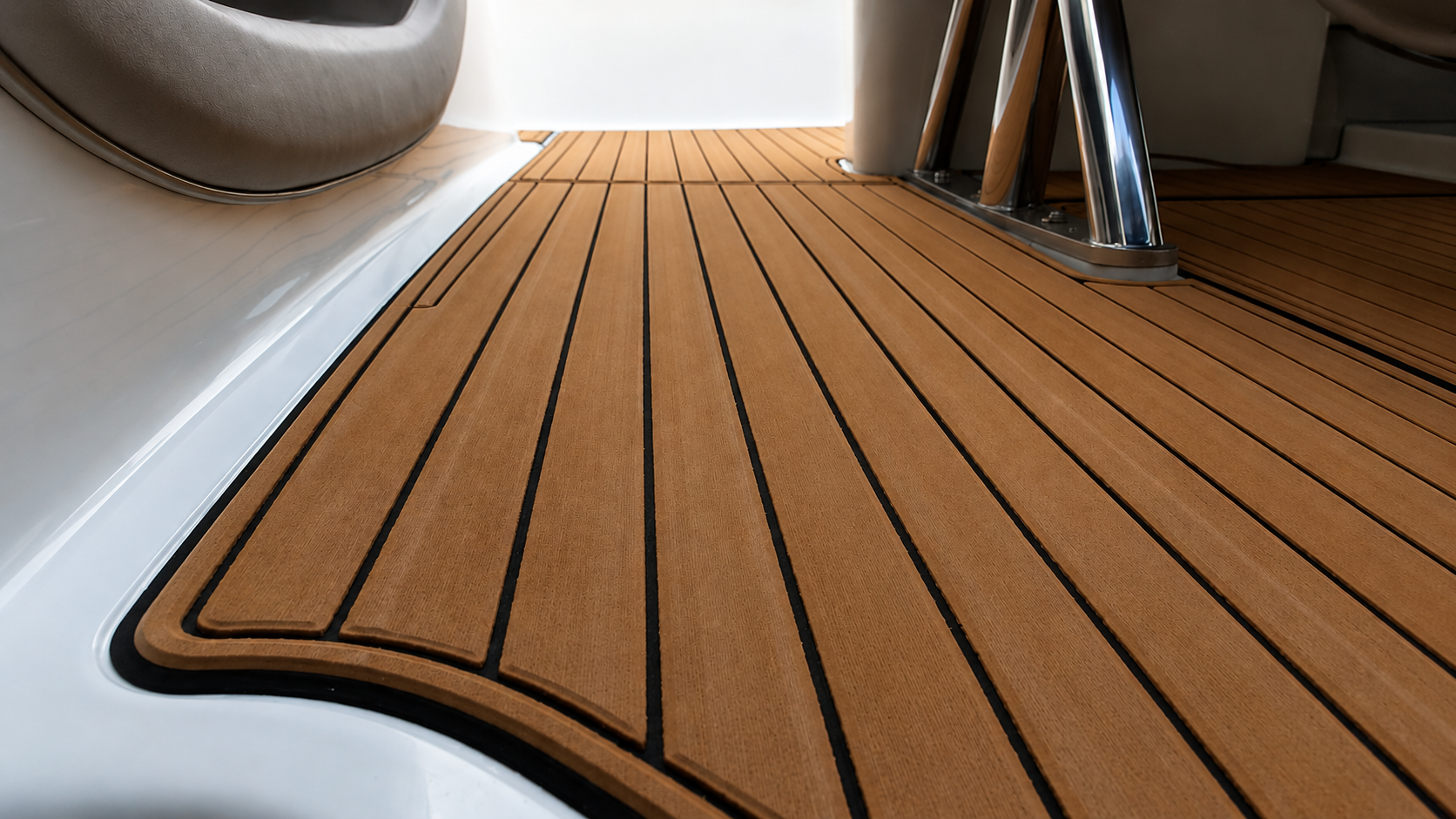
SC Wake is a SeaDek certified fabricator. That means the company handles the entire process: templating the boat, designing the layout in CAD, cutting the foam with CNC precision, and installing the finished kit. Owners can pick from over 35 colors and multiple textures, plus routing patterns that include faux teak designs mimicking the look of planked wood.
The material features a 3M pressure-sensitive adhesive backing and a peel-and-stick style. Installation skips the fasteners and caulking that wood requires, along with the days of skilled boatyard time.
How Each Type of Flooring Feels Underfoot
While a wooden deck looks great, it does have a way of making your knees and lower back complain after a long day on the water. Wood is a hard, non-giving surface. It can also get hot underfoot in the summer, especially with darker stains. Although a well-maintained teak deck has natural non-skid from its grain, that texture wears smoother over the years.
SeaDek feels different from the very first step. The foam has a soft give that absorbs impact and dampens vibration, which is the exact kind of detail you don't realize matters until you have spent eight hours on the water without back stiffness setting in. The closed-cell construction also stays cooler than fiberglass or wood under direct sun, since heat doesn't transfer well through the foam.
|
ℹ️Quick Tip: SC Wake's faux teak SeaDek patterns are popular with owners who want the look of a classic wood deck paired with the comfort and traction of modern foam. |
Safety and Traction
Wood gets its grip from grain texture and the caulked seams between planks. That texture is genuine but doesn't last forever. It wears more smoothly under bare feet, fishing boots, and dock dirt over the years, and a deck that grips well at year three may be noticeably slicker by year fifteen unless it's been refinished.
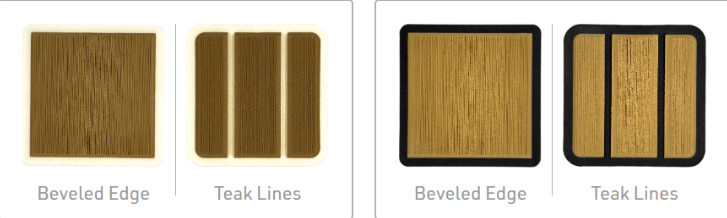
Because the actual texture is milled into the foam itself, SeaDek is engineered to feel great underfoot and deliver solid traction, through either a brushed pattern (for a softer feel) or an embossed pattern (with more aggressive grip). Either way, it remains consistent throughout the material's lifetime, wet or dry.
The cushion in the foam also softens the impact when someone slips on deck. We are not suggesting that slipping off the steps flat onto your back will be a pleasurable experience, but it will feel far less brutal than a slip and a thud onto a hardwood deck.
The Cost of Wood Deck Maintenance
A real teak deck needs a great deal of attention. Done well, the maintenance can be quite satisfying and keeps the deck looking the way it should. Overlooked or done poorly, and the deck deteriorates alarmingly fast.
Routine care involves regular washing, ideally with salt water and a soft brush scrubbed across the grain rather than along it. Pressure washing is one of the fastest ways to ruin a teak deck, as is scrubbing with the grain, which gouges out the softer wood between the harder ridges, and greatly accelerates thinning.
Then you have the seams, which need re-caulking periodically as the original sealant ages. Sanding addresses weathering, but every sanding takes a small amount of wood off the deck, which is why teak boards get thinner over the years.

Teak oils and sealers are popular, but slightly controversial. Many marine experts argue that they trap moisture and create more problems than they solve.
UV exposure is also famously brutal on natural wood - covers and indoor storage extend a deck's life considerably. None of this is unmanageable, of course - and some people enjoy the process - but combined together, it does add up to quite a bit of work and cost.
For context, a full new teak deck on a 40-foot boat can easily exceed $30,000 once materials and skilled labor are factored in, whereas SeaDek is a fraction of that outlay (we will get to that shortly).
SeaDek's Low-Maintenance
SeaDek's care routine is mercifully simple. A simple rinse after each trip removes most of the salt and grime, while mild soap and a soft brush handle tougher buildups. SC Wake's very own SC Shine cleaner is there for stubborn residue when it's needed.
|
ℹ️Quick Tip: Keep acid-based hull cleaners off the foam. The acids break down EVA over time, fading colors and dulling the texture that gives SeaDek its grip. Mask off pads when cleaning hull stains nearby. |
The closed-cell foam doesn't absorb water, so mold and rot are not concerns the way they are with wood. UV exposure does eventually wear the material, but the foam is engineered with UV inhibitors that slow fading and surface breakdown.
Typical lifespan runs five to seven years with regular outdoor use, and owners who store their boats indoors or under cover often get well beyond that. When the time eventually comes to replace it, the foam peels up cleanly, and a new kit goes in without the major undertaking of re-decking a wooden boat.
|
Factor |
Wood (Teak) |
SeaDek |
|
Daily care |
Rinse required |
Minimal |
|
Deep cleaning |
Complex. Risks damage |
Simple wash |
|
Lifespan |
10–40+ years (with maintenance) |
5–7 years typical |
|
Replacement |
Major project |
Simpler replacement |
|
Weather protection |
Cover recommended |
UV resistant |
Investment vs. Long-Term Value
The strongest comparison between SeaDek and wood boat flooring lies in upfront cost. Quality teak runs roughly $100 to $130 per square foot installed, and that's before factoring in the ongoing maintenance costs that come with wood boat flooring. Refinishing, re-caulking, oil treatments, and the occasional plank replacement all add up over the years.
SeaDek's initial investment is far more accessible, and its cost over time is more… predictable. A complete custom kit for an average-sized recreational boat typically lands in the low- to mid-thousands, depending on coverage area, color choices, and any custom routing or branding work.
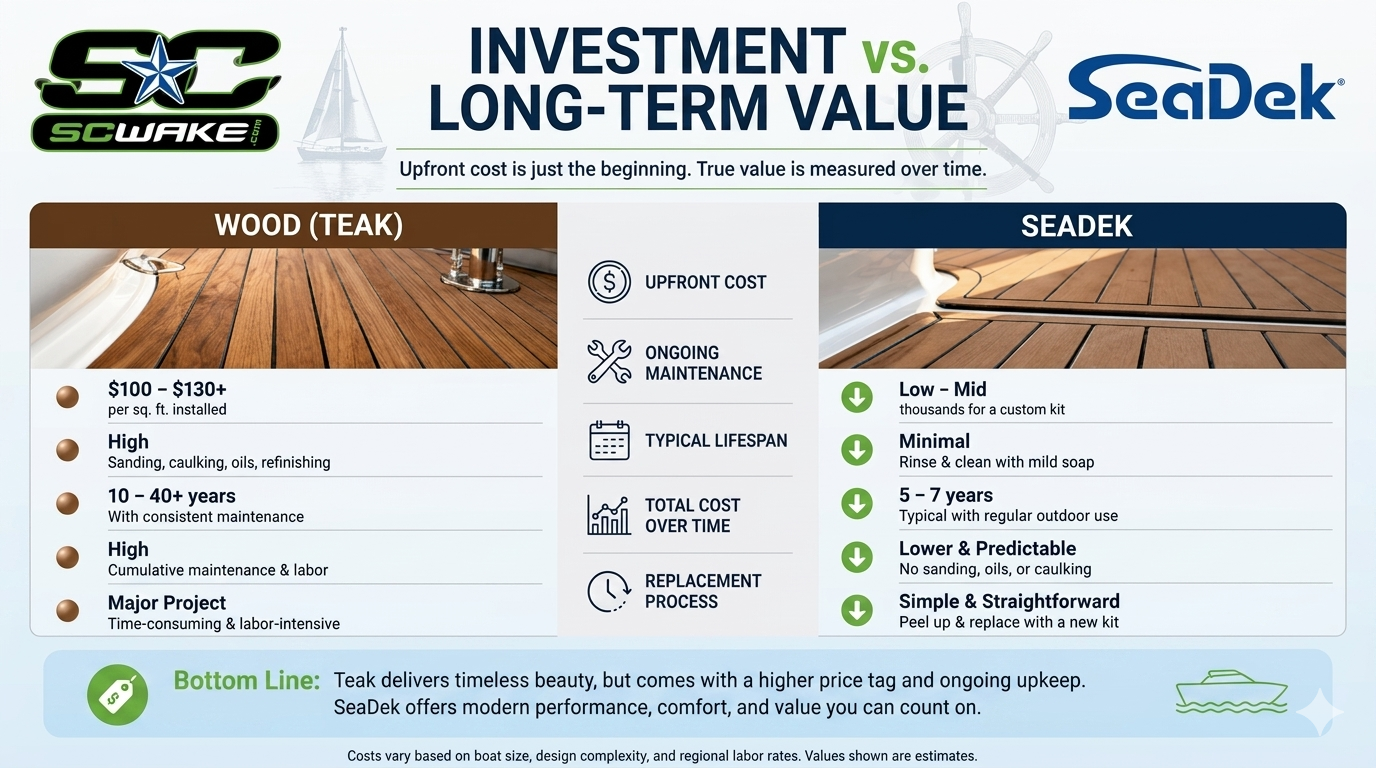
That's a small fraction of the cost of a wood deck, and a far easier number to plan around. There's no annual sanding, oiling, or caulking refresh, and the replacement cycle is straightforward when it eventually comes around.
The SeaDek DIY option also removes labor from the equation. SC Wake provides custom quotes for each boat based on size, layout, and design choices, since pricing varies considerably between a small bay boat and a larger center console.
Classic Beauty vs. Modern Versatility
The aesthetics of a boat's flooring is somewhat of a big deal for most people, and rightly so, because the deck is something owners look at and take pride in, not just walk across.
Now, a real teak deck is undeniably beautiful. Of course it is. Nothing competes with the healthy glow and even the smell of a gorgeous teak deck. The grain pattern in each board is unique, the warm color shifts into a soft silver patina over time (or stays golden-brown when oiled), and the craftsmanship is undeniable. The trade-off is that the color palette is whatever nature provides.
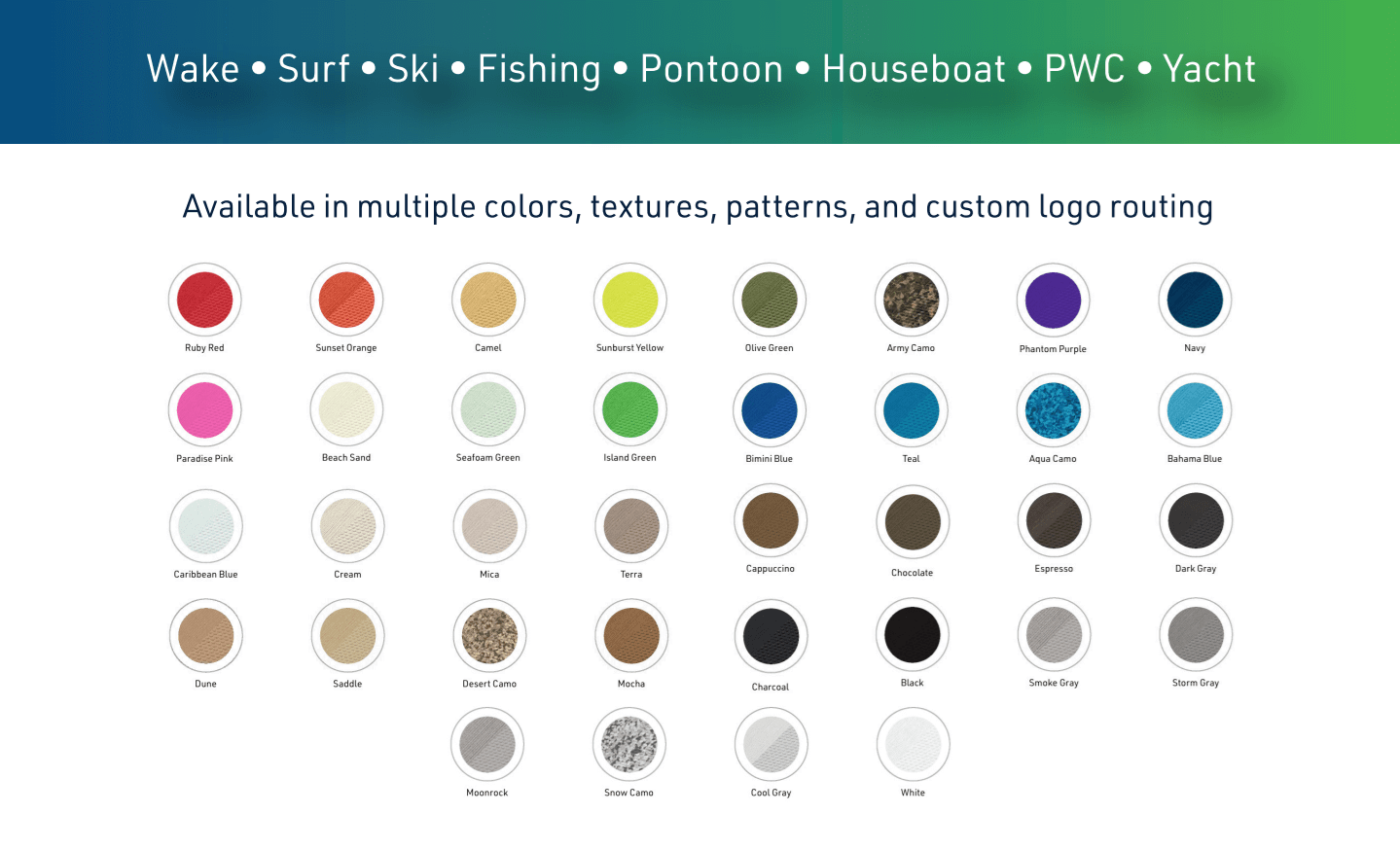
Conversely, with over thirty-five SeaDek colors available, ranging from neutral cream and gray through saturated blues, vibrant reds, deep greens, and beyond, you are almost spoiled for choice with SeaDek. Faux teak patterns sit alongside diamond and hexagon routing, and custom logos can be laser-cut into the surface for owners who want to make the deck their own.
Style & Texture Options with SeaDek
For owners who love the look of a teak deck but not the maintenance that comes with it, faux teak SeaDek is the closest middle ground available. The patterns replicate planked wood, simulated seam lines, and from a few feet away, most people can't tell the difference. Underfoot, of course, it feels nothing like wood.
And that's rather the point. SeaDek is actually quite pleasurable to walk on, hour after hour. Wood deck flooring, as already discussed, can take it out of you after a while.
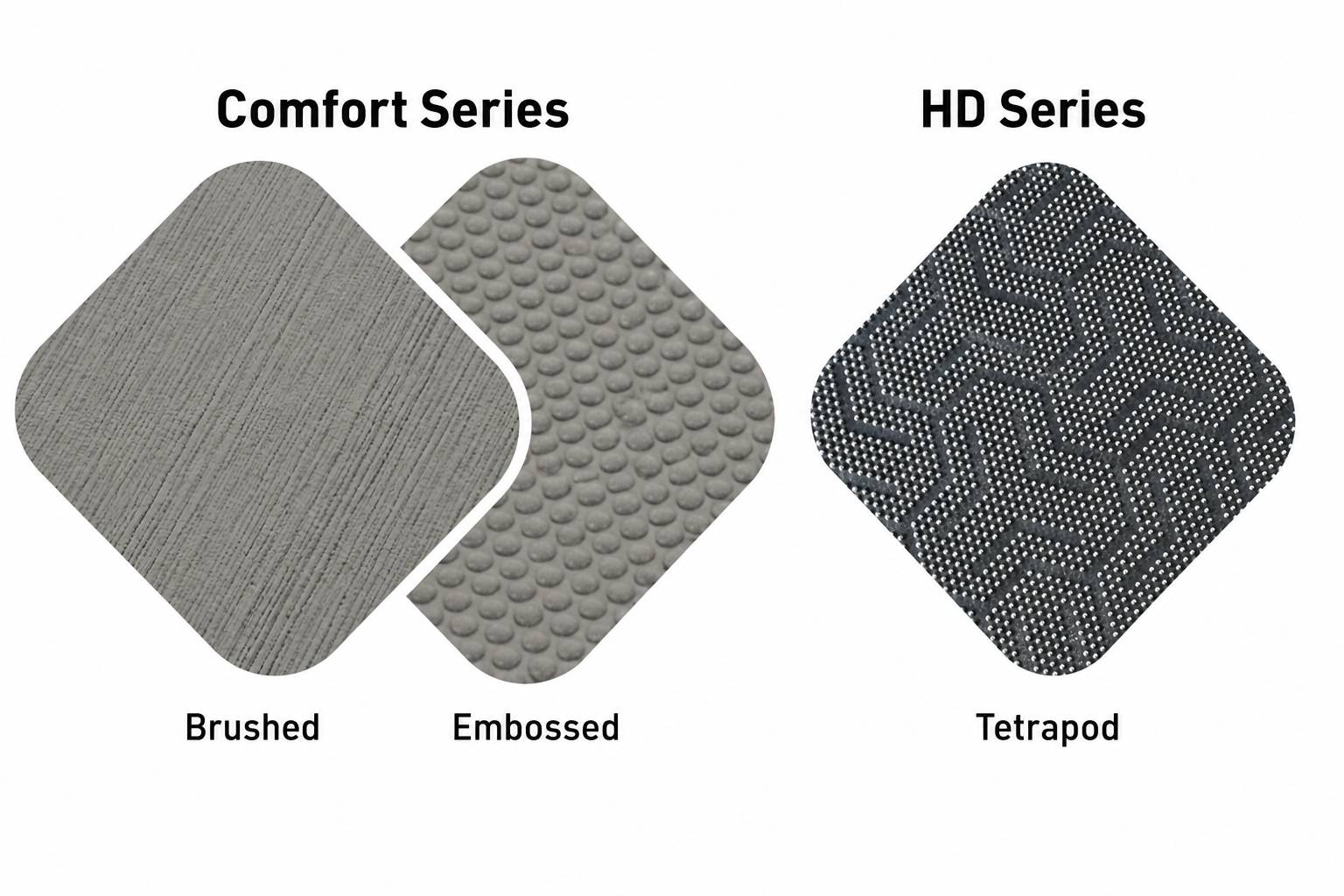
Beyond faux teak, owners can choose from different routing patterns that alter the floor's visual character. Diamond patterns suit sportier boats and tournament rigs, while hexagonal routing has a more contemporary feel. A clean perimeter border keeps things minimalist for those who prefer simpler looks.
Custom branding is available, too. Boat names, fishing team logos, marina branding, and personal artwork can all be laser-cut into the foam, which has made SeaDek popular with charter operators and tournament teams looking to put a stamp on their rigs.
Getting Your New Flooring In Place
Installing a new wooden deck is a real job. Each plank has to be precisely fit, the seams have to be properly caulked, and the work typically takes a skilled craftsperson several days from start to finish. Wood also adds noticeable weight to the boat, which can affect performance and fuel consumption on smaller vessels.
SeaDek installation is in a different league entirely. The 3M pressure-sensitive adhesive backing means the kits go down with hand pressure and a clean surface, no fasteners or sealants involved. SC Wake's custom-cut kits are designed to fit each boat's exact dimensions, and the whole job usually takes an afternoon. The foam itself is lightweight and adds very little to the boat's overall weight.
|
ℹ️Quick Tip: SC Wake provides dry-fit templates so owners can confirm the kit fits before removing the adhesive backing. Prefer professional installation? The company also maintains a nationwide network of certified SeaDek installers. |
Which Is Right for Your Boat?
Of course, there can be no universal winner here. The right flooring is completely subjective and depends largely on your priorities, budget, and whether you prefer classic aesthetics, low maintenance, onboard comfort, or long-term ownership costs.
Wood may be the better fit if:
- The boat is a classic or luxury yacht where traditional aesthetics matter most
- There's the time and budget to keep up with regular deck maintenance
- The boat stays covered or stored indoors when not in use
- The character and craftsmanship of real teak are part of why you bought the boat
SeaDek may be the better fit if:
- More time on the water and less time on maintenance is the goal
- Comfort and traction matter, particularly for family boats or long fishing days underway
- You want customization options that go beyond natural wood tones
- A more predictable cost structure makes sense for the budget
- DIY installation is an option you want to keep open
Bottom Line: Your Flooring, Your Choice
Both wooden decking and SeaDek have earned their place in the marine industry, and there is no right or wrong choice here. The decision usually comes down to where an owner places value between tradition and convenience, and (crucially) what level of maintenance they are willing to take on for the look they want.
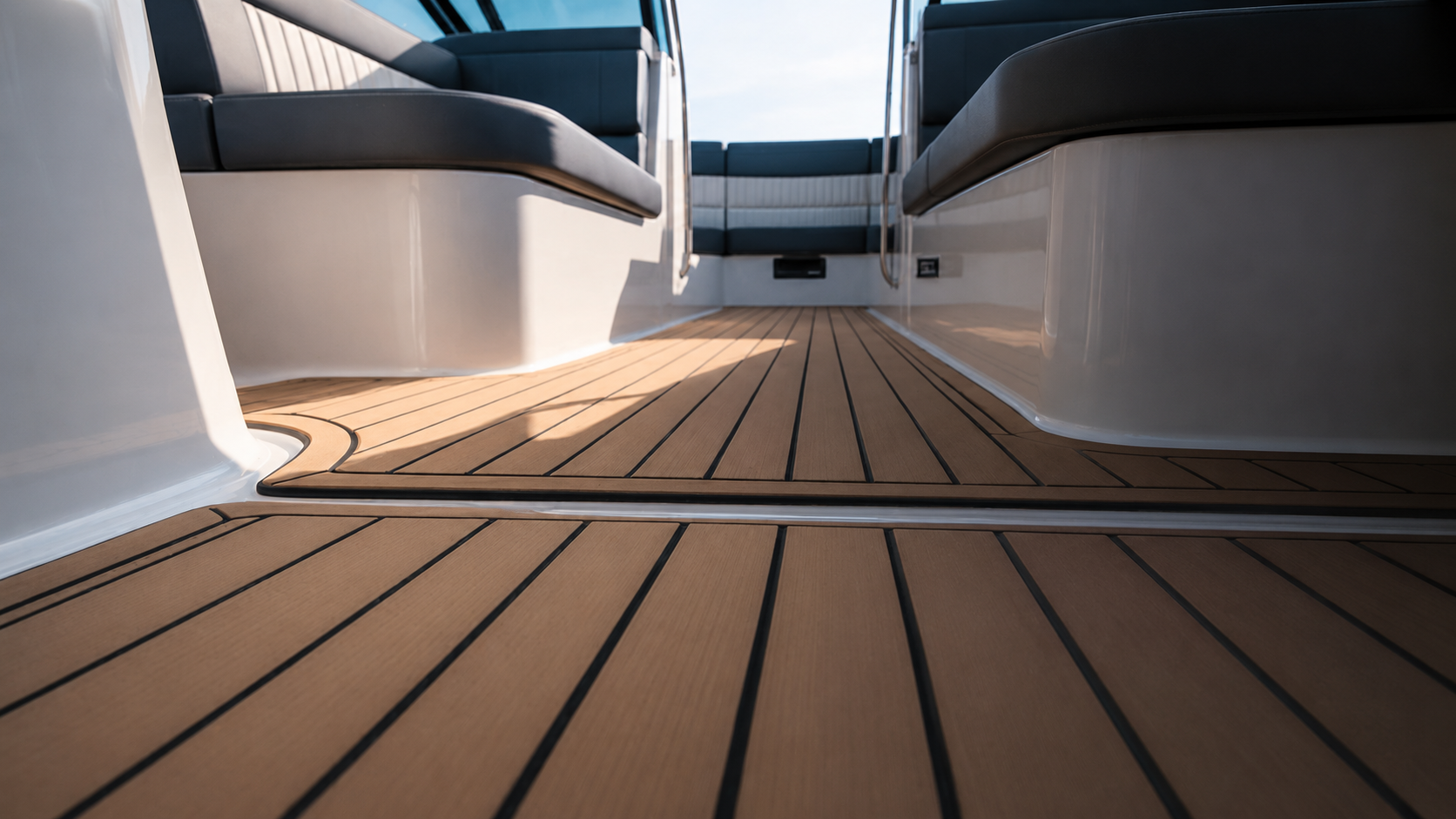
There is one last thing that might be worth noting, though: SeaDek's faux teak options mean you don't necessarily have to choose between the classic wood look and modern performance, and for some owners, that’s the deciding factor. Ultimately, SeaDek delivers the stunning good looks of natural wood, without the various costs and elbow grease that go with it.
Interested in seeing what SeaDek could look like on your boat? Feel free to browse your options throughout the website, or get right to it with a SeaDek custom quote. We can work from photos, dimensions, or existing templates to create a solution tailored to your vessel.