

Pool Safety Upgrade: SeaDek Non-Slip Deck Mats
posted by Ryan Sacksteder on Apr 27th 2026
Pool Safety Upgrade: SeaDek Non-Slip Deck Mats
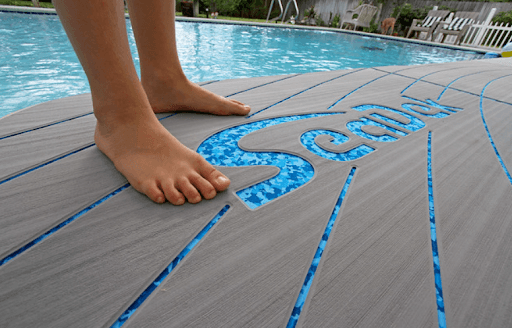
Most pool owners only realize how slippery their deck is after someone does that awkward cartoon-style foot shuffle near the edge. In the moment, it looks vaguely hilarious, until you remember there is concrete, water, and human spines involved in the equation.
If you are trying to determine how to make a pool deck less slippery, the internet will happily engulf you in options, but none of them can match the sheer reliability and clean, eye-catching look of a non-slip deck surface that has already proven itself on boat swim platforms and wet steps all over the world.
We are, of course, talking about SeaDek Marine Flooring.
What Is Seadek for Pool Decks?
You might describe SeaDek pool safety mats as a happy accidental invention, as it started life as a marine flooring upgrade - and that's where it continues to thrive. Boats of all shapes and sizes, through all four corners of this rather wet planet, use SeaDek to ensure their boat flooring is grippy, comfortable, and looking good.
This popularity stems from its closed-cell PE/EVA foam with a textured surface and a peel-and-stick adhesive backing, making it cushioned, non-absorbent, grippy when wet, and designed to live on surfaces that spend their days getting hammered by water, sun, and bare feet.
Around swimming pools, that mix of useful traits translates into:
- Non-slip traction when surfaces are wet
- Softer landings than concrete or tile
- Surfaces that do not soak up water or grime
- A finish that looks intentional rather than like an emergency fix
In short, this clever product is mostly used on boat decks, swim platforms, and boat steps: all places where a slip can go very wrong, very fast.
Using SeaDek for a non-slippery pool deck solution might feel dramatic in comparison to a luxury yacht, but plenty of people swear by it for pool areas, and you will struggle to find a better solution.
But why do you even need a solution in the first place?
Why Pool Decks Get So Awfully Slippery
Most pool decks were designed to look good, but not necessarily to handle an endless parade of wet feet, sunscreen, and drink spills. Yes, there are plenty of pool decks with a sufficiently grippy surface, but as any ER department will attest, there are plenty that aren't.
A few of the biggest offenders include:
⚠️Smooth concrete, tile and decking: Fine when dry, treacherous as soon as they see water.
⚠️Algae and film: Even “lightly” neglected decks build up a thin layer of slick grime.
⚠️Sunscreen and body oils: They smear, they spread, and they do not do traction any favours.
⚠️Steps and edges: The exact spots people plant weight on one foot, usually while distracted.
If you are specifically worried about how to fix slippery pool steps, you are definitely right to focus on that, as it is a legitimate safety concern. Steps concentrate weight, water, and motion in a space of a few square inches - for this same reason, SeaDek is also commonly used for boat step pads.
How Seadek Helps With Safety Around the Pool
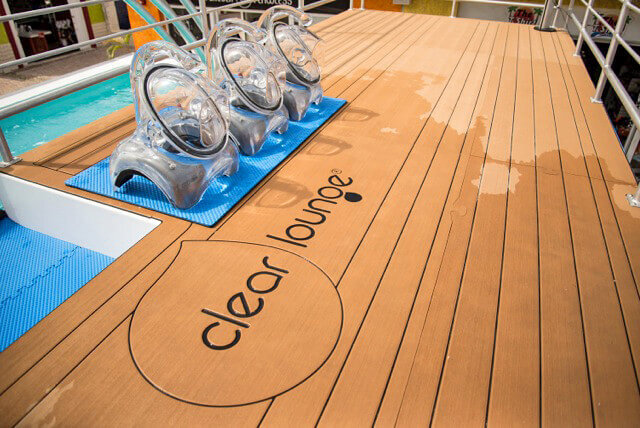
Independent British Pendulum testing on wet surfaces puts SeaDek in the highest slip-resistance band (a Pendulum Test Value above 45, for those who are interested), while most generic options sit a tier or two lower, which is not what you want under wet bare feet.
Behind the scenes, the quality team even carves up part of every material batch for destructive testing and runs it through accelerated UV cycles - SeaDek is still performing after 14 cycles, where a competing foam is effectively done after the first - so the surface you are trusting to keep people upright does not suddenly give up after a couple of summers.
To describe this stuff as rigorously tested would be a gross understatement. Other prime benefits include:
Reliable Grip When Wet
The foam is patterned and textured, so your feet “bite” into the surface instead of skating across it. It is meant for wet, moving environments - pools are comparatively tame.
Cushioning and Shock Absorption
You get just enough give underfoot to soften landings, especially useful for kids, older adults, and anyone who has ever misjudged a step height.
Temperature Management
Concrete and darker tiles can hit egg-frying territory by mid-afternoon. The foam structure tends to shed heat faster, especially in lighter colors, giving you a non-slip pool deck you can stand on.
Noise reduction
There is a small but immediately noticeable drop in the harsh slap of bare feet on hard surfaces. Your pool area feels less like a high school locker room and more like a deliberately designed space.
|
ℹ️Tip: If you are not ready to redo the whole deck, start with: ✔️Steps and ladders ✔️The main in/out point nearest the pool ✔️Any areas where kids queue up to jump in |
Keep Your Insurance Company Happy
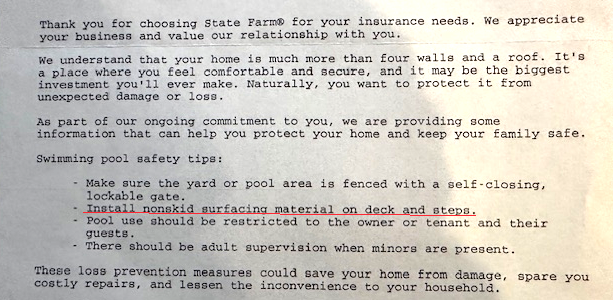
SeaDek can be a good option for pool decks from a safety and liability standpoint, as it is engineered to provide superior non-slip traction and comfort.
Safety and Insurance Liability Points
- Reduced Slip-and-Fall Risk: SeaDek offers high-traction, non-skid properties, even when wet, which can reduce the liability risk of slip-and-fall accidents, a primary concern for homeowners insurance carriers.
- Comfort and Heat Reduction: SeaDek remains cooler to the touch in direct sunlight compared to many alternative materials, improving safety for bare feet.
- Appearance: Its clean look can also be seen as a positive enhancement to the safety of a "swimming pool area,".
Design and Comfort
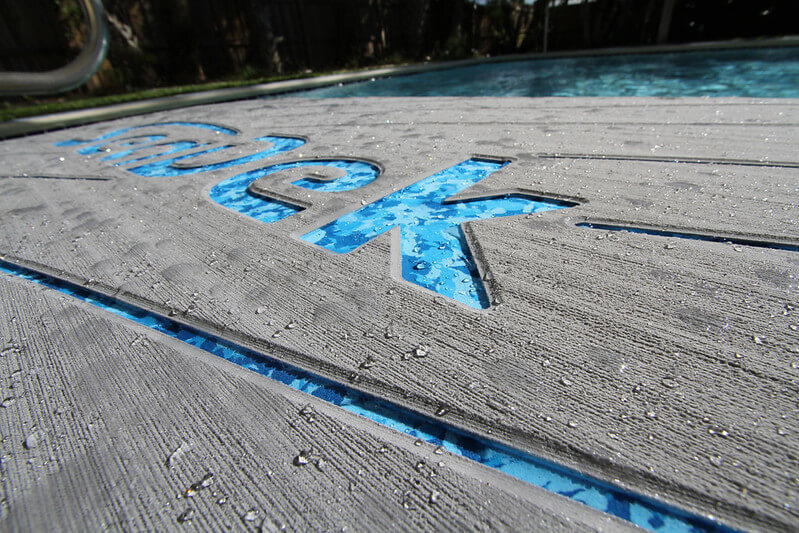
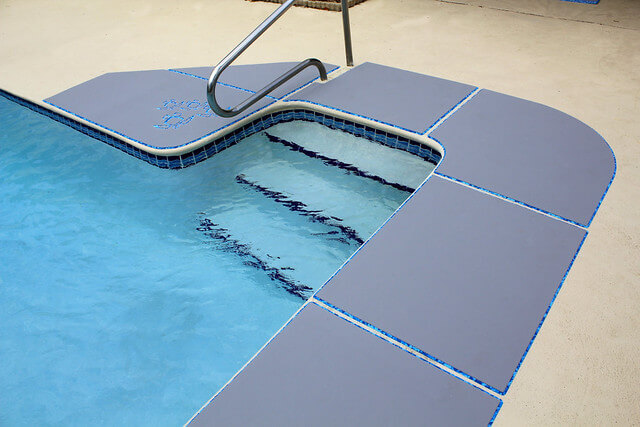
Nobody wants their backyard oasis to look like a commercial pool wrapped in safety tape. One of the advantages of using SeaDek for pool deck upgrades is that it looks like part of the design rather than a thrown-together solution.
With SeaDek pool safety mats, you have a wealth of design and texture options available, including:
- Colors: Classic teak-style combos like Mocha over Black or Camel if you want that warm, timber look, or cooler tones such as Storm Gray, Cool Gray, or Moonrock for a more modern, architectural feel. Brighter shades like Bahama Blue or Teal can work as subtle accents around a pool without turning the whole deck into a theme park.
- Textures and patterns: Brushed finishes for a soft, barefoot-friendly feel, Embossed for a slightly more aggressive grip, or more intricate routed designs like faux teak planks, hexagon layouts, or pinline borders if you want the deck to quietly show off a little.
- Thickness options: Single-color non-slippery pool deck mats if you prefer minimal, two-color laminations for clean contrast around step edges, or tri-color setups where you can have a base color, a border, and a routed logo or emblem worked into the surface for a properly custom finish.
Either way, instead of rolling out generic non-slip pool deck mats that look like a temporary eye sore, you end up with defined lounging zones, visible walkways, and clearly marked steps that actually look like they belong there.
SeaDek vs. Common Slippery Pool Deck Solutions
|
Solution |
Grip When Wet |
Comfort Underfoot |
Aesthetics at a Glance |
Typical Issues |
|
Textured/anti-slip paint |
Better than smooth |
Hard, can be abrasive |
Looks “coated” or industrial |
Can chip, peel, and fade over time |
|
Rubber or PVC roll-out mats |
Decent initially |
Soft but often spongy |
Obviously temporary |
Water trapped under mats, tripping edges |
|
Grip tapes / adhesive strips |
High in small areas |
Harsh on bare feet |
Patchy, clearly retrofitted |
Peel, collect dirt at the edges |
|
SeaDek non-slip deck mats |
Engineered for wet use |
Cushioned, comfortable |
Looks designed-in when templated |
Needs a clean, dry surface for proper adhesion |
Where SeaDek Makes the Biggest Difference Around a Pool
You do not have to blanket every square inch of concrete to get value out of SeaDek. Quite the opposite, in fact: being selective can make the pool area feel much more deliberate.
High-impact areas include:
- Steps and shallow entries: This is the perfect spot for anyone searching for how to make pool steps not slippery. A few well-cut pieces at the leading edge completely change how secure steps feel.
- Primary traffic lanes: The paths between the house, pool, and seating zones. A subtle band of non-slip pool deck mats gives you an obvious walk here route.
- Diving, jumping, and splash zones: Anywhere kids are likely to launch themselves into the water and land a bit less gracefully than planned.
- Built-in benches and seating ledges: SeaDek adds grip and comfort to spots where people sit, drape themselves, and step up and down repeatedly.
|
ℹ️Need More Inspiration? SeaDek is not only a great upgrade for pool decks and swim platforms. If you want ideas for using the same material on RV steps, golf carts, coolers, and more, take a look at our guide, Five Creative Ways to Use SeaDek Beyond Boats. |
Installation: From Idea to Non-Slip Deck
As far as weekend projects go, SeaDek installation is virtually effortless, comparatively speaking, of course. The term weekend project is usually code for three trips to the hardware store and at least one mild breakdown - installing SeaDek is closer to sticking on a giant decal than wrestling with grout, mortar, or power tools.
Once you know which parts of the pool deck you want to tame, the process looks like this:
- Clean the surface thoroughly (no dust, no oils, no residue).
- Make simple templates or measurements for the areas you want covered.
- Cut SeaDek pieces to size or order pre-cut shapes based on your templates.
- Peel the backing and apply carefully, pressing from the centre outward to avoid bubbles.
- Work around edges with extra pressure to keep water from sneaking under.
If you are comfortable with DIY, simple rectangular zones and step fronts are very manageable. For more complex shapes, curves, or full perimeter layouts, it can make sense to have a fabricator help with templating and cutting so everything lines up perfectly.

Once in place, you get a non-slippery pool deck that stays put, rather than shifting every time somebody runs for a towel.
Maintenance: Keeping SeaDek Looking Good Around a Pool
SeaDek is designed to live in harsh environments, but a little basic care goes a long way. The maintenance routine is quite simple. Just pay attention to the following pointers, and you will keep your new non-slippery pool decking looking pristine for several years at a minimum:
✔️Rinse regularly to remove dust, grit, and pool chemicals.
✔️Use mild soap and a medium-bristle brush for sunscreen or drink spills.
✔️Tackle stubborn marks before they have a chance to sit and bake in the sun.
✔️Avoid harsh solvents or wire brushes, as they can damage the surface.
Because the foam is closed-cell, it does not soak in water, so you are not dealing with a soggy mat that stays wet all day or starts to smell. When the surface is clean, it looks clean - no hidden moisture trapped underneath.
Before you start cutting foam, check the brand’s DIY and templating guides. They walk through tools, templating tricks, and installation steps that will save you time (and swear words).
|
Ready to Rethink Your Pool Deck?
SeaDek turns a slippery, hope-for-the-best pool deck into something that really works in your favour every time bare feet hit the surface. It is a custom job rather than a grab‑and‑go mat, which is exactly why it fits, looks, and performs the way it does.
Want to see what that could look like around your pool? Just send a few photos and measurements through the SeaDek custom quote form to get started.
FAQs
Can you use SeaDek for a pool deck?
Yes, SeaDek is a non-absorbent, closed-cell foam that works well on hard, dry, above-water surfaces around pools - things like concrete coping, steps, and seating areas. It is not meant as a permanently submerged liner, but as a non-slip pool deck surface in all the places people walk, stand, and climb.
Are SeaDek pool safety mats really non-slip when wet?
Yes, SeaDek was designed for boat decks, swim platforms, and other wet environments, so wet traction is built into the material, not an afterthought. The textured surface and foam composition give feet something to bite into even when water is present, which is precisely what you want around a pool.
How can SeaDek help fix slippery pool steps?
If you are wondering how to fix slippery pool steps without tearing everything out, SeaDek is a strong candidate. Custom cut pieces can be applied to the leading edge and top surfaces of steps, transforming high-risk spots into grippy, cushioned footholds. The difference in confidence stepping in and out is immediate.
Will SeaDek get too hot in the sun around a pool?
Any surface will warm up under full summer sun, especially darker colors. SeaDek’s foam structure tends to shed heat faster than dense concrete, and lighter color choices stay noticeably more comfortable. In practice, that means fewer “hot-foot” dashes from lounger to pool.
How do you clean SeaDek around a pool?
Rinse regularly with fresh water, then use mild soap and a medium-bristle brush for dirt, sunscreen, or drink spills. Because the foam is closed-cell, it does not soak in water or grime, so most dirt lives on the surface and comes off without much effort.
How long does SeaDek last on a pool deck?
In typical conditions, SeaDek installations are expected to last several seasons (often in the 5–7 year range) with proper care and without constant harsh abuse. Good cleaning habits and avoiding unnecessary gouging or dragging heavy furniture across the surface both help maximize lifespan.
Can I install SeaDek myself, or do I need a professional?
Simple shapes and small areas suit competent DIYers, especially if you are comfortable measuring, templating, and cutting clean lines. For complex pool layouts, curves, or full perimeter projects, many owners prefer working with an experienced, certified SeaDek Installer who can template the area and supply precision-cut pieces.