
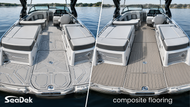
SeaDek vs Composite Boat Flooring: Comfort, Durability, and Design Compared
posted by Erica Fisk on Sep 18th 2026
Twenty years ago, marine flooring meant a straight choice between teak and marine carpet. Teak was gorgeous but expensive and needed the kind of ongoing care that turned your pride-and-joy boat into a regrettable full-time job. Carpet was cheap, but it smelled treacherous in a surprisingly short period of time.
You were, as the old saying goes, stuck between a rock and a hard place.
But the interesting, reliable, safe, and (above all) comfortable flooring today lives somewhere between those two extremes, and two categories in particular have taken most of that middle ground. Composite boat flooring and SeaDek marine flooring.
Both showed up on boats decades ago, and both have spent the last ten years getting increasingly better at doing quite different things, to the point that now, in 2026, the question is no longer teak versus carpet, but SeaDek versus composite.
What Composite Boat Flooring Actually Means
Composite boat flooring encompasses a wide range of products in the marine world, and it includes items that share almost nothing except that they are synthetic. There are three main types you're likely to run into.
Synthetic Teak Boards
Arguably the biggest category. Brands like Flexiteek, PlasDECK, Esthec, and NuTeak sell PVC-based planks that mimic traditional teak decking, complete with routed seam lines and a milled surface. From a distance, they look convincingly like the real thing. Up close, the tell is usually the uniformity, because no real wood is that consistent and unnatural in its uniformity.
Woven Marine Vinyl
This is a completely different animal. Products like Infinity and Marideck are textile-style flooring, glued or heat-welded to the deck. They are popular on bay boats and pontoons, where the goal is a clean, easy surface that beats bare fiberglass without pretending to be teak.
Engineered Composite Panels
Such as Coosa or Plascore are more structural than finished, so they tend to sit under something else rather than under your feet. But for the purposes of this comparison, we are really talking about the first two, which brings us neatly to the question of SeaDek.
What Is SeaDek?
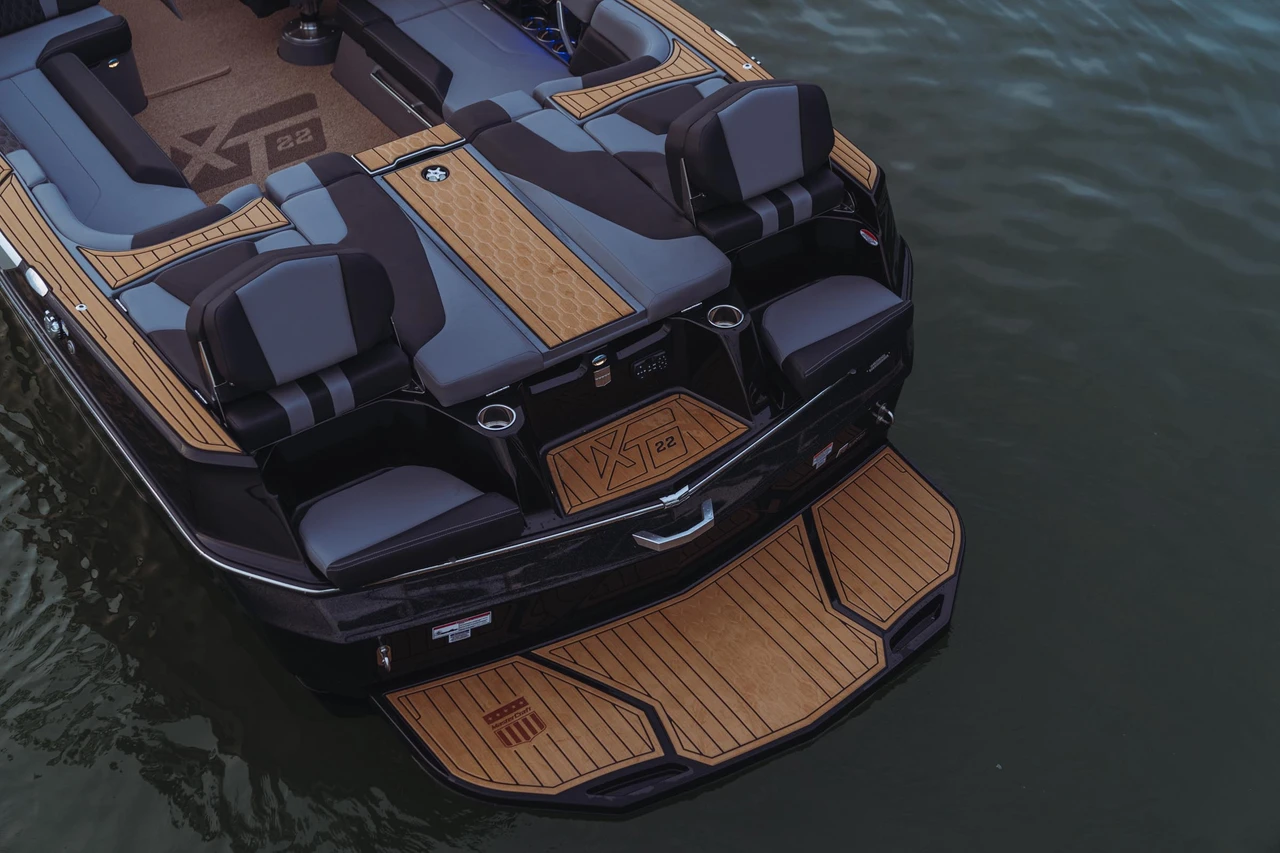
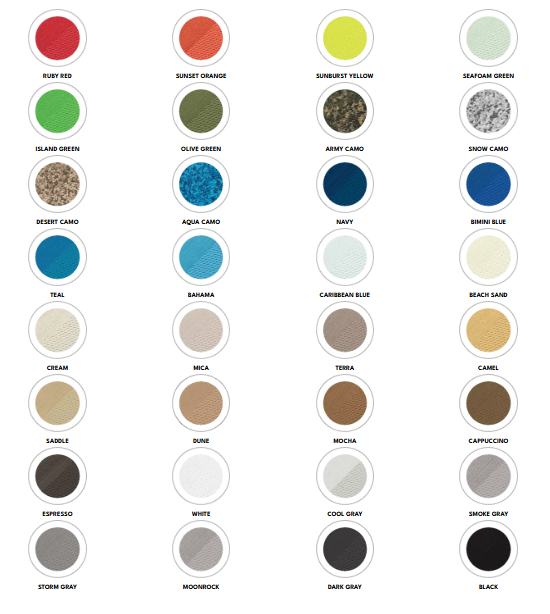
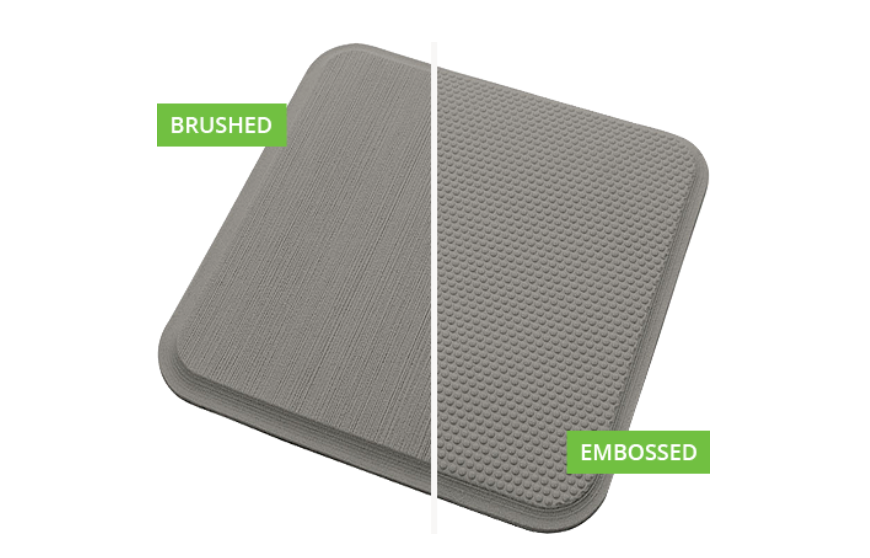
SeaDek is closed-cell PE/EVA foam engineered for marine environments. The closed-cell aspect means the material doesn't absorb water, so nothing seeps underneath waiting to rot or grow something green. It comes in over thirty-five colors, textures, and designs, with three main surface finishes: Brushed for softer barefoot comfort, Embossed for more aggressive grip, plus the newer HD Tetrapod for heavy-duty applications where the deck takes a real beating.
SC Wake is a SeaDek Certified Fabricator, which means the whole job runs in-house, from templating the boat to CAD design, CNC cutting, and installation (or shipping the kit out for peel-and-stick DIY). Custom color combinations and routing patterns are on the standard menu, along with laser-cut logos and boat names.
Comfort: Where SeaDek Wins Clearly
Frankly, composite boat flooring and SeaDek live in different universes, when it comes to comfort. That may seem like a bold (and clearly biased) claim, but both anecdotal and tangible evidence support it.
Composite boat flooring is essentially as firm as whatever it's imitating. Synthetic teak boards feel like teak boards, because they are rigid PVC pretending to be rigid wood. Marine vinyl has a bit of give but nothing you'd describe as cushioned. SeaDek is foam, and foam has actual mechanical give underfoot.
After a long day on the water, that difference shows in your lower back. Anglers who spend eight hours moving around a deck can feel it in their knees by the time they pack up. Families with barefoot kids notice how much the floor absorbs impact rather than reflecting it, and slips inevitably land more softly.
It's the kind of feature that sounds almost a little trivial in a product description, but shows up incredibly quickly on the water.
The other comfort factor is heat. Foam is an insulator, so SeaDek stays noticeably cooler than PVC-based composite under direct sun. In a Florida marina at 2 pm, synthetic teak in a darker color can be genuinely unpleasant to walk on barefoot. SeaDek, under the same conditions, releases heat quickly and remains walkable.
|
ℹ️ Worth knowing: SC Wake's faux teak SeaDek patterns give owners the look of composite synthetic teak with the underfoot comfort of foam. If the wood aesthetic is what you want but the feel of composite has put you off, this might be a suitable middle ground. |
Durability: Composite Wins Clearly
In terms of raw lifespan, composite boat flooring is probably the tougher option. A properly installed synthetic teak deck will stay put for fifteen to twenty years, often longer, and woven vinyl gives a decade or more. SeaDek's typical outdoor lifespan is five to seven years, sometimes longer if the boat lives under cover.
Composite is also more damage-resistant. The rigid PVC boards shrug off dropped anchors and tackle boxes in a way SeaDek doesn't. Foam can be gouged or torn by something sharp enough, and pet claws are the classic weakness. What composite gives up in comfort, it earns back in raw toughness.
Long-Term Math
The catch, however, is what happens at the end of life. Replacing a composite deck is essentially a full re-install: boards get pried up, the subfloor may need attention, and skilled labor is involved for anything bigger than a bay boat. Installing SeaDek is as simple as peeling the old kit off and sticking a new one down in an afternoon. That's it. Composite lasts longer, but refreshing SeaDek is cheaper, faster, and something an owner can genuinely do on a weekend.
Both materials grip well when wet, composite through milled or embossed patterns, and SeaDek through the texture milled into the foam itself. Both are also low-maintenance, needing little more than soap, water, and a soft brush for stubborn buildup. SC Wake's Boat SC Shine cleaner handles anything harder SeaDek can throw at you.
|
Factor |
Composite |
SeaDek |
|
Underfoot feel |
Firm |
Cushioned |
|
Heat under direct sun |
Warmer |
Cooler |
|
Surface lifespan |
15–20+ years |
5–7 years typical |
|
Damage resistance |
High (dents/scratches) |
Moderate (scratches/tears) |
|
Replacement |
Major project |
Simple refresh |
|
Daily care |
Easy |
Easy |
Design: SeaDek's Second Clear Advantage
If you want a personalized deck, SeaDek is definitely the material to work with.
Composite boat flooring is limited by what it's imitating. Synthetic teak comes in a handful of teak tones and grays, for example, while marine vinyl offers a wider palette but tends toward solid colors and simple patterns. Adding custom branding to a composite option is technically possible but expensive, and usually needs specialist work.
SeaDek colors and designs are on a completely different level. The catalog includes over thirty-five named colors and multiple textures, plus routing patterns such as faux teak, diamond, hexagon, and dozens of others. Two-color and three-color laminations expose the under-color through routing lines for depth, and laser-cut logos and custom artwork sit on the standard menu, too.
|
|
|
Installation and Cost
Installing composite boat flooring is almost always a professional job. Synthetic teak planks are glued, screwed, or both, and even a modest boat means several days of skilled labor. Costs reflect that. Synthetic teak runs $40 to $80 per square foot installed. Marine vinyl is more accessible at $15 to $40 per square foot.
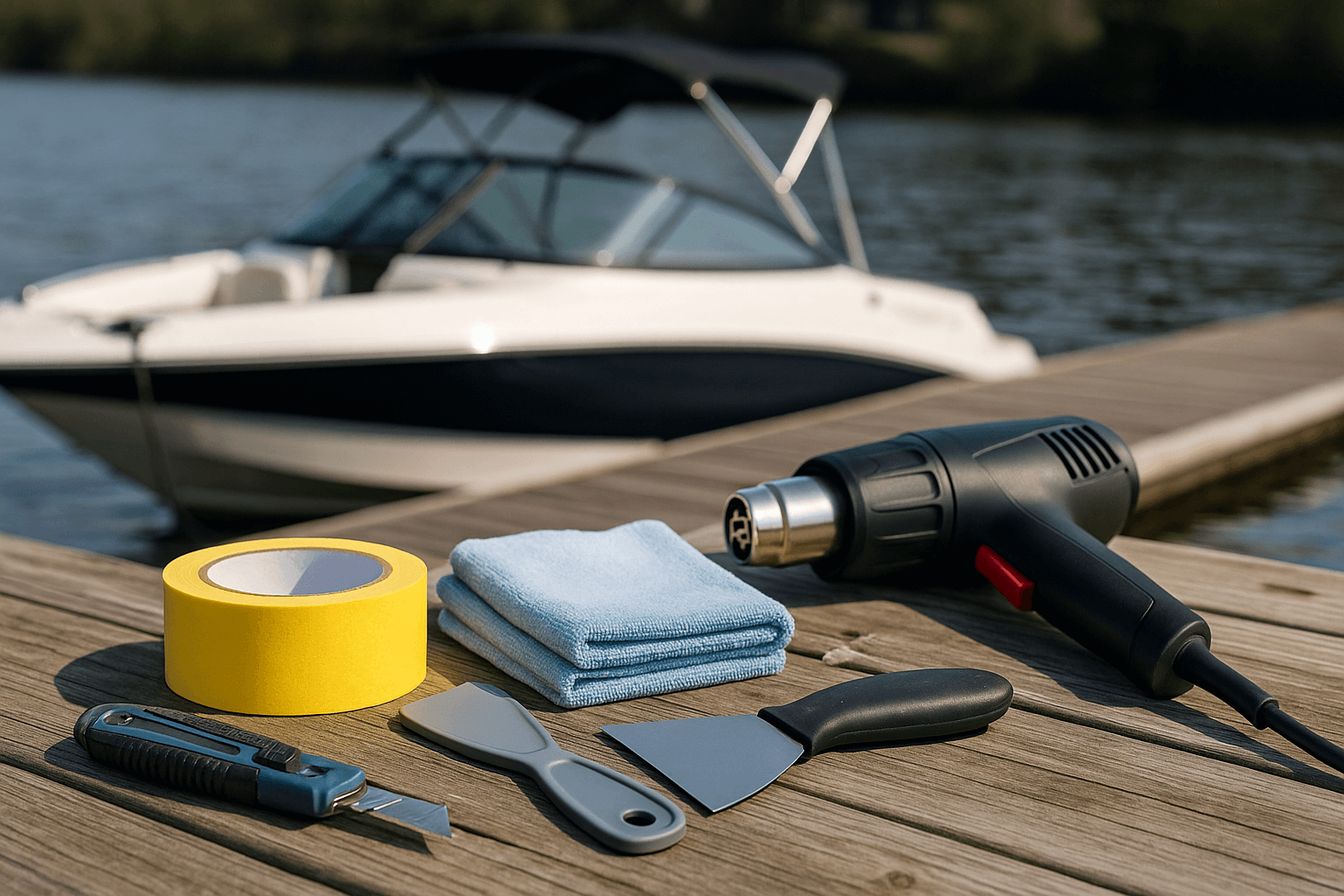
SeaDek is designed for peel-and-stick installation. The 3M adhesive backing means no fasteners or sealants are needed, and most jobs finish in an afternoon. SeaDek is fairly simple and easy install, and a certified SeaDek installer network is available if you prefer professional hands.
A full-custom SeaDek kit for an average recreational boat costs somewhere in the low- to mid-thousands, with the exact amount varying by size, layout, and design choices.
|
ℹ️ Worth knowing: SC Wake provides dry-fit templates so you can verify the kit fits properly before peeling the adhesive backing. It removes the one anxiety point most first-time installers have. |
Which One Belongs on Your Boat?
While both materials are legitimate, the right one depends on what the boat does and what you value most.
Composite makes more sense if:
- You want the longest possible surface lifespan and can absorb the upfront cost
- The boat sees heavy, rough use with dropped gear and sharp objects
- You specifically want the look of teak planks and don't mind the underfoot feel
- The boat lives in a marina with year-round professional servicing
SeaDek makes more sense if:
- You spend long hours on the water and want a floor that doesn't punish your back
- Custom colors, patterns, or branding matter to you
- The boat runs in a hot climate where bare feet regularly meet the deck
- DIY installation is something you'd like as an option
- You'd rather refresh flooring every five to seven years than commit to a fifteen-year decision
Bottom Line
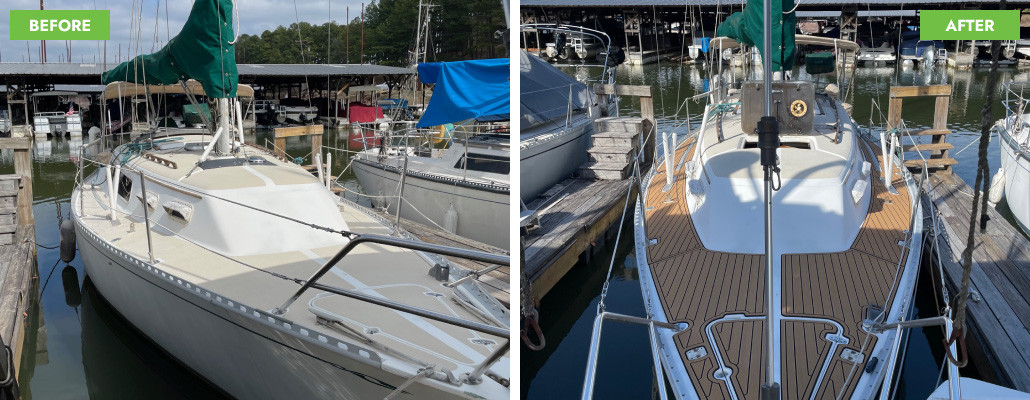
Composite boat flooring and SeaDek are both modern, legitimate solutions for marine flooring, and, in fact, neither is objectively better than the other. Composite wins on lifespan and toughness, while SeaDek wins on comfort, cooling, and design flexibility.
If you're stuck between the two on looks alone, we might be able to help with the following simple fact: SeaDek's faux teak patterns cover most of the visual ground that composites offer, with the objectively better foam comfort as a much-welcome bonus.
Ready to see what SeaDek would look like on your boat? SC Wake works from photos, dimensions, or your own templates. Request a quote to get a custom design started.