
How to Clean Boat Carpet (And When It's Time to Replace It)
posted by Erica Fisk on Oct 20th 2026
|
TLDR: To clean boat carpet, vacuum it with a wet/dry shop vac, then scrub it with a marine carpet cleaner or mild soap and a stiff brush. Rinse, extract as much water as you can and treat any mildew with a vinegar or oxygen bleach solution. Let the carpet dry completely in the sun and moving air before you cover the boat. |
There is simply no escaping the fact that every boat with carpet eventually develops a smell, without exception. Even the most glamorous of yachts with the most expensive shag pile known to mankind will, at some point, emanate a nasty, unpleasant odor.
It usually announces its presence in early summer, when you pull the cover off after a week of rain and get hit with something vaguely reminiscent of a wet German Shepherd. Yup, that's mildew, and it's taken residence in the fibers and the padding below, sometimes (god forbid) all the way down to the plywood.
Carpet + Boat Flooring = A Very Expensive Sponge
The reason is obvious. Carpet holds water the way a sponge does, which is great for a sponge but less than ideal for a boat. That said, in this day and age most carpet can be brought back with a hefty amount of elbow grease and a slow drying routine.
Unfortunately, some carpet is past saving, and knowing which kind you have can save you a lot of that aforementioned elbow grease every weekend. This guide explains how.
How to Clean Boat Carpet: Key Takeaways
- Vacuum often during the season with a wet/dry shop vac so sand and grit don't grind into the fibers.
- Treat mildew with white vinegar or oxygen bleach, and skip chlorine bleach, which fades color and weakens the backing.
- Drying decides whether mildew comes back, so give carpet sun and airflow before the cover goes on.
- Keep pressure washers on a wide fan tip and a low setting to protect fibers and adhesive.
- If the smell returns within days of a deep clean, or the deck feels soft underfoot, replacement usually makes more sense than another scrub.
Vacuuming and Routine Cleaning
It may sound counter intuitive, but always start with a dry vacuum. A wet/dry shop vac beats a household vacuum here because it has the suction to pull sand out of a dense marine pile.
Next, pull out anything removable. Snap-in carpet panels and loose floor mats clean better on the dock or driveway, where you can scrub them flat and let them dry in full sun.
For the wash itself, mix a marine carpet cleaner or a few squirts of mild dish soap into a bucket of warm water. Work it in with a stiff nylon brush one section at a time, then rinse with a hose. Pretty simple and logical really - the procedure is nothing groundbreaking. Just clean it.
|
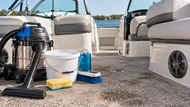
ℹ️Pro Tip: Keeping a dedicated set of boat cleaning supplies aboard turns routine cleanups into a ten-minute job instead of an afternoon. |
After rinsing, go back over the carpet with the shop vac to pull the water out. This is the step most people skip, and it makes the biggest difference later.
Treating Mildew and Odor
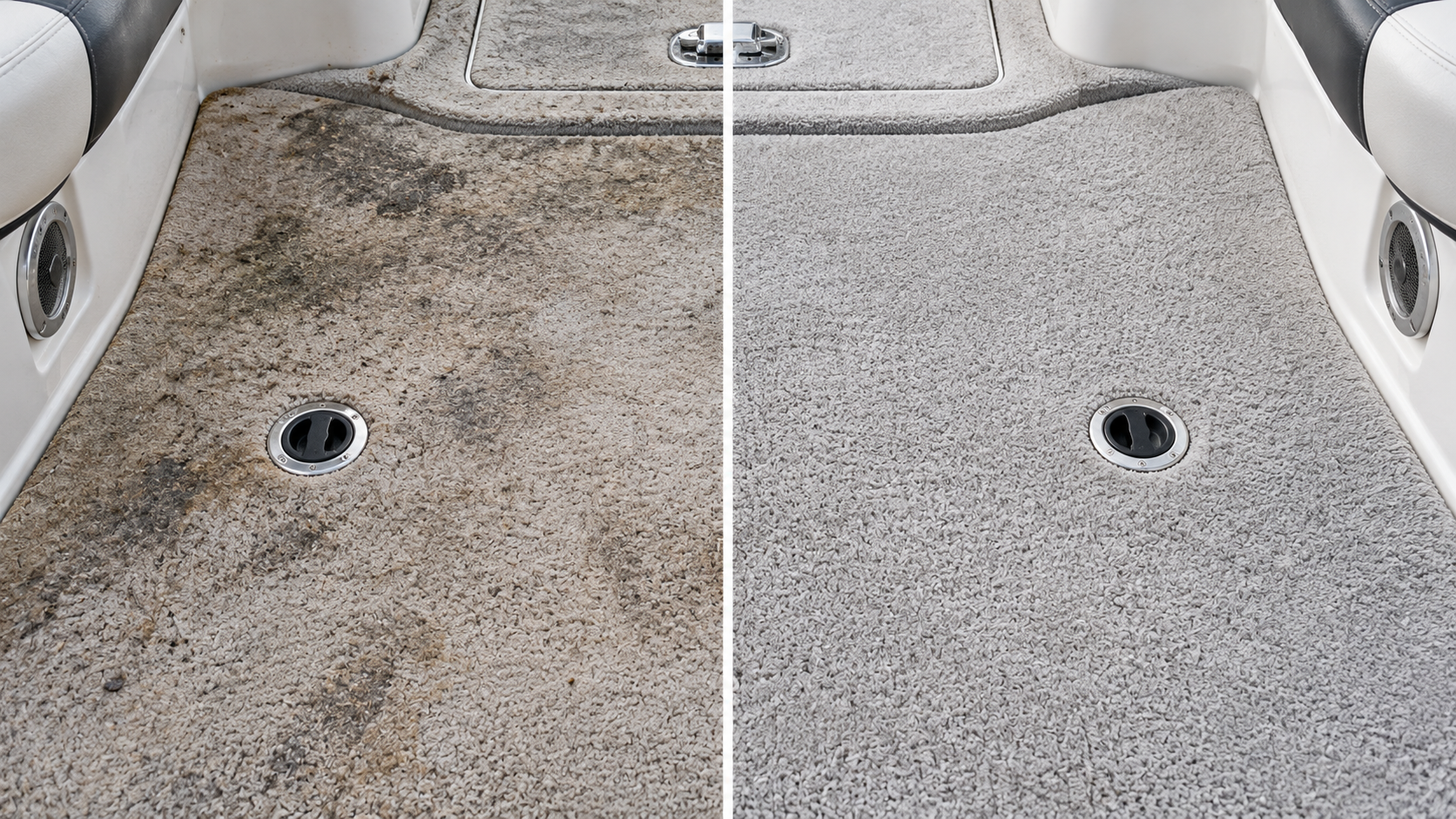
And with the vacuuming complete, we are back to our old friend mildew, which shows up as dark gray or black speckles, often near drains and in the shady spots under seats. It usually declares itself by smell long before you see it.
For light mildew, a 50/50 mix of white vinegar and water in a spray bottle works well. Soak the area, let it sit for around 15 to 20 minutes, then scrub and rinse. Yes, your boat will smell like a salad for an hour or so, but that fades a lot faster than mildew does, so it's worth putting up with.
For heavier growth, switch to an oxygen bleach product (the powdered kind sold for laundry) dissolved in warm water. It lifts stains and kills mildew without stripping color. Chlorine bleach is a different thing entirely, though - it fades marine carpet fast and can break down the latex backing and the glue holding everything to the deck. Avoid it.
Tougher Smells
Fish slime and spilled drinks leave odors that soap alone won't shift, of course. An enzyme cleaner is your best bet here, as it digests the source of the smell rather than masking it. Once the carpet is clean and dry, sprinkle baking soda over any stubborn spots, leave it overnight and vacuum it up in the morning.
Alternatively - you know, just as a preventative measure - avoid reeling-in gigantic oceanic fish onto a boat decked out with a wool carpet.
|
ℹ️Pro Tip: Pressure washers are fine on marine carpet if you use a wide fan tip, stay on a low setting and keep the wand a couple of feet back. Get too close and you'll blast fibers loose and drive water under the edges, where it starts lifting the adhesive. |
Drying Properly to Prevent Mold Return
Cleaning removes the mildew you can see, but drying is what stops it from coming back. Mildew needs moisture to grow, and carpet glued over a padded deck can hold water for days. Weeks, even.
The obvious solution - depending on the season and where you do your boating - is to clean on a dry, sunny day whenever you can, and start early so the carpet gets a full afternoon of sun. The scorchier, the better. Open every hatch and locker to let air move under the deck and, if you have them, a couple of box fans pointed across the floor speed things up a lot.
Don't put the cover on until the carpet is dry all the way down. Press a paper towel firmly into the thickest area, and if it comes up damp, give it more time. Covering a wet boat traps humidity and will likely result in the aforementioned wet German Shepherd making a return appearance.
For ongoing prevention, use cover supports or a vented cover so air can circulate. A moisture absorber tucked in a locker helps between trips.
When Cleaning Stops Being Worth It
Some carpet is simply done. If you've deep cleaned, dried it properly and the musty smell is back within a few days, the problem is far more complex and likely unsalvageable. Water has usually worked its way into the padding or the wood beneath, and no surface cleaner will get there.
Matted traffic lanes, stains that survive oxygen bleach and seams curling at the edges all point the same way. The biggest red flag is a soft or spongy spot underfoot, which often means the plywood deck has started to rot. While that's not quite as disastrous as it sounds, it certainly isn't a good thing, either.
Pulling Up the Old Stuff
Removing boat carpet is a manageable DIY job. Take out the seats and any hardware screwed through the carpet, then cut it into strips with a utility knife so it peels up more easily. Scrape off the old adhesive with a floor scraper and use an adhesive remover on the stubborn patches. Once the deck is bare, check every inch for soft spots before anything new goes down.
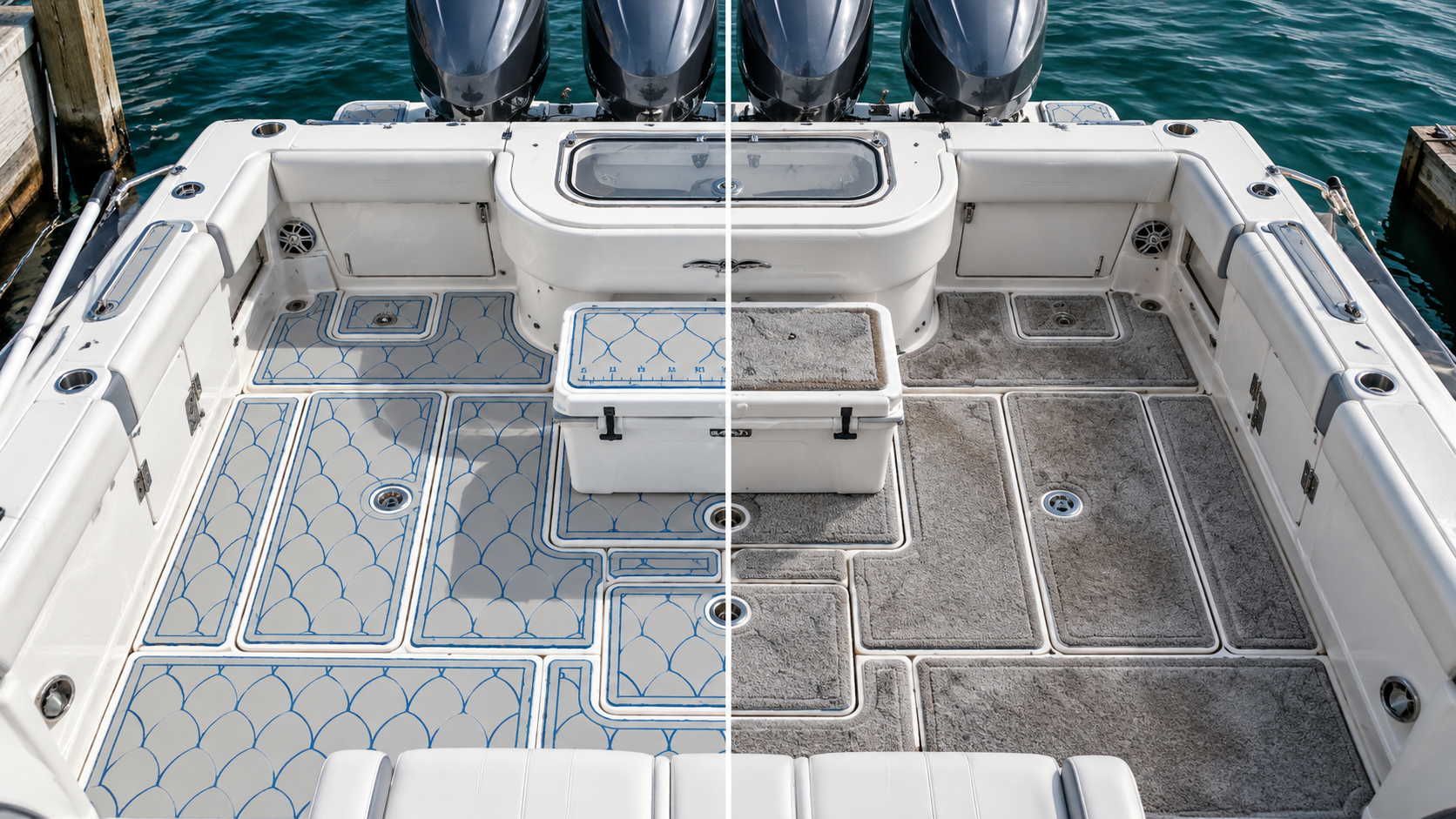
From there, you can lay fresh carpet and start the cycle over, or switch to a surface that doesn't hold water at all. Closed-cell EVA foam like SeaDek sheds water instead of soaking it up, so mildew has nothing to feed on. Our SeaDek vs marine carpet comparison covers the costs and trade-offs side by side if you're still deciding.
Keep Your Deck Fresh
Most boat carpet can be rescued with regular vacuuming, a mildew treatment when it needs one and a real commitment to drying. Stay on top of it, and the smell that greets you when the cover comes off will be lake air instead of basement.
If cleaning has started to feel like a losing battle, we are happy to provide a far better solution. SC Wake has been fitting boats with custom SeaDek since 2009, from our shops in New Trenton, Indiana and Lake Havasu, Arizona. We also have nationwide installers on hand to transform your vessel.
Get in touch for a no-pressure SeaDek quote, and let's discuss giving your boat a whole new lease of life.
About the Author: Erica Fisk is part of the SC Wake team, a SeaDek Certified Fabricator and Installer. SC Wake handles everything from templating and CAD design to CNC cutting and installation, helping boat owners across the country trade tired carpet for flooring that's built for the water.
FAQs
Can I use a carpet shampooer on boat carpet?
Yes, a portable carpet extractor pulls out more water than a shop vac alone. Use a low-foam cleaner and make extra rinse passes, since leftover soap attracts dirt.
How often should I clean boat carpet?
Vacuum after most outings during the season and give it a full scrub about once a month. Add a mildew treatment at the start and end of each season.
Can I use bleach on boat carpet?
Skip chlorine bleach, as it fades color and weakens the backing and adhesive. Oxygen bleach or a vinegar solution handles mildew without the damage.
How do you remove boat carpet?
Remove the seats and hardware, cut the carpet into strips and pull it up. Scrape and dissolve the old glue, then inspect the deck for rot before installing new flooring.
Is SeaDek easier to keep clean than carpet?
Much easier. Most dirt rinses off with a hose, and a soft brush with a SeaDek EVA foam cleaner takes care of scuffs and stains. Closed-cell foam doesn't absorb water, so there's no drying routine to plan around.