

Secrets to a Slip-Resistant Boat Floor Revealed
posted by Erica Fisk on Jul 24th 2026
It is a fate that many boat owners experience at one point or another. Joyfully reeling in the catch of a lifetime, your feet suddenly slide out from under you, resulting in a surprising and entirely avoidable injury, courtesy of a slippery boat deck.
According to the U.S. Coast Guard's Recreational Boating Statistics Report, boating accidents frequently claim lives, with slippery boat surfaces playing a more common role than you might imagine. In fact, approximately 50 % of all maritime injury claims are attributed to slips and falls.
Farewell to Slippery Boat Decking
Thankfully, a non-skid boat deck doesn't have to be out of reach for most boaters. If you are dealing with a chronically slippery boat or planning upgrades for better safety, this blog post contains proven solutions that really work.
From quick budget fixes to more reliable, professional-grade non-slip boat deck material installations, we shall explain how to achieve a firm footing on your boat. But apart from the obvious factor of water meets decking, what is it that makes your footing so awfully slippery when out boating?
Why Boat Decks Get Slippery
Most boat decks start with gelcoat, which is a smooth, glossy surface that looks great but provides minimal grip when wet. By the time you have thrown in a little misplaced sunscreen, dropped fish slime, or even just morning dew, you are left with a veritable skating rink.
Algae growth makes the problem even worse, especially in areas that stay damp. Even microscopic buildup creates a biofilm that's incredibly slick and bothersome underfoot.
The main signs of a slippery boat surface include:
- Glossy appearance even when clean
- Visible oil or sunscreen residue streaks
- Green or dark discoloration in corners
- Surfaces that feel slick even when dry
- Areas where crew members instinctively grab handholds
Slippery Boat Deck Safety Audit
If you want to know how your deck really performs, try this quick test: spray a section with your washdown hose and carefully test the grip with your foot (while holding onto something secure, obviously). For a more precise measurement, use your phone's inclinometer app to check how steep an angle you can handle before losing traction.
Most boat decks should provide secure footing at angles up to 15-20 degrees when wet. If you're sliding at gentler angles, it's probably time to investigate your non-skid boat deck options.
Overview of Anti-Slip Solutions
The marine industry offers several approaches to creating better traction, each with distinct advantages and limitations. Understanding these categories helps you choose the right solution for your specific needs and budget.
Six main categories dominate the market:
- Non-skid paints and additives
- EVA/PE foam traction materials
- Temporary mats and modular tiles
- Molded-in fiberglass textures
- Natural materials like teak
- Grip tape and rubberized overlays
|
Material |
Wet/Dry Grip |
Durability |
Maintenance |
Cost |
Best For |
|
Non-skid paint |
Good/Excellent |
3-5 years |
Medium |
$ |
Large areas |
|
EVA foam |
Excellent/Excellent |
5-7 years |
Low |
$$ |
Custom applications |
|
Temporary mats |
Good/Good |
2-3 years |
High |
$ |
Renters/test areas |
|
Molded texture |
Fair/Good |
10+ years |
Medium |
$$$ |
New construction |
|
Natural teak |
Good/Fair |
10+ years |
High |
$$$$ |
Traditional yachts |
|
Grip tape |
Excellent/Good |
1-2 years |
Low |
$ |
Small problem spots |
Paint Solutions for a Non-Skid Boat
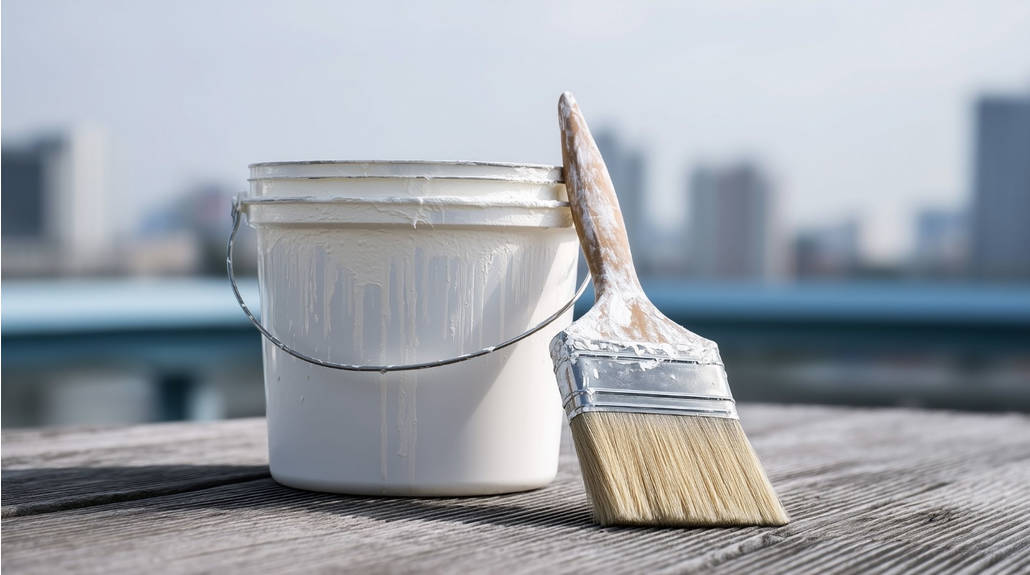
Non-skid paints work by suspending abrasive particles in a protective coating, creating texture as the paint cures. Modern formulations usually use aluminum oxide, silica sand, or specialized polymer beads to provide grip without being overly aggressive on bare feet.
Pros:
- Covers large areas efficiently
- Can be applied over existing gelcoat
- Wide range of colors and textures available
- Professional appearance when done correctly
Cons:
- Requires complete surface preparation
- Durability depends heavily on application quality
- Difficult to remove once applied
- Can trap dirt and require aggressive cleaning
Typical cost: $3-8 per square foot, including materials and labor. Two-part polyurethanes tend to cost more but last longer than single-component options.
Best for: Large deck areas on boats where permanent modification is acceptable, particularly commercial or heavily-used recreational vessels.
EVA Foam Traction Materials: The SeaDek Advantage
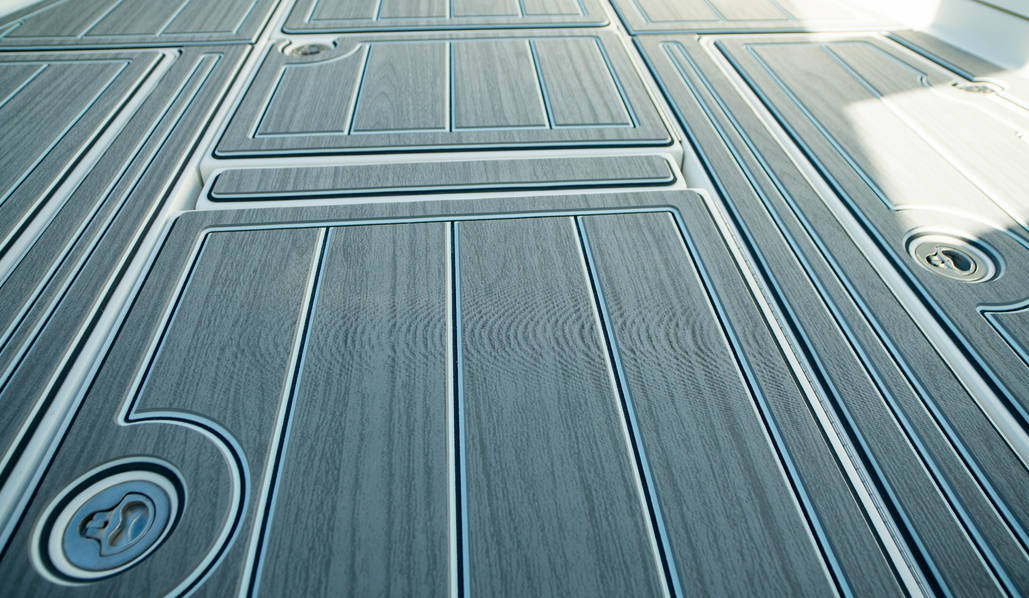
This is where we are bound to show a little bias, although we genuinely believe our product is the best option for making a boat deck non-skid. Our bias is rooted in good reason, though.
Essentially, EVA (Ethylene Vinyl Acetate) foam is a vastly different approach to non-skid decking. Instead of rough particles, you get cushioned comfort that actually improves with water contact - and therein lies the genius.
SeaDek leads this category with closed-cell PE/EVA foam that's specifically formulated for marine use.
The material provides exceptional grip on previously slippery boat decks while remaining comfortable for barefoot use. Unlike paint solutions, you can customize the boat flooring design with shapes, colors, and textures to match your boat's aesthetic absolutely perfectly.
Pros:
- Superior comfort for extended standing
- Excellent traction in all conditions
- Easy to clean and maintain
- Completely removable without surface damage
- Custom colors and patterns available
- UV-resistant with a 5-7 year lifespan
- Noise reduction benefits
Cons:
- Higher upfront cost than paint
- Requires precise measurement and cutting
- Can show scuff marks on lighter colors (usually after many years)
Typical cost: $8-15 per square foot, depending on customization level and installation complexity.
Best for: Boat owners who want the best non-skid boat deck applications, particularly anyone who sees value in comfort and customization options. SeaDek is perfect for fishing boats, day cruisers, and luxury vessels where crew comfort is important.
Furthermore, the closed-cell construction means water can't penetrate and cause odors or degradation. This fundamental advantage has made EVA SeaDek foam the prime choice for serious boaters who appreciate long-term value.
Non Skid Decking for Boats: Quick Overview
Temporary mats and tiles offer flexibility for renters or anyone who may be testing non-skid boat deck arrangements. They usually use rubber compounds with drainage channels, but don't expect the long, healthy life or custom fit of better solutions like SeaDek.
Molded-in textures work well for new boat construction, but on the other hand, they can't be retrofitted to existing vessels. The texture is permanent but often way too aggressive for comfortable bare feet.
Natural teak provides classic, timeless beauty (and makes your boat deck non-skid when properly maintained), but it also requires regular oiling and professional installation. To describe it as a headache to maintain would be an understatement. The cost also exceeds other options by some distance.
Grip tape handles small problem areas effectively but lacks the professional appearance and comfort of other solutions. We might suggest considering it for temporary fixes rather than comprehensive, comfortable, safe deck coverage.
Two Proven Upgrades
DIY Non-Skid Paint Application
Serious elbow grease is almost a prerequisite for this type of non-skid decking. Start by sanding with 40-grit paper to create mechanical adhesion, then clean thoroughly with acetone to remove all wax and oils.
Mask carefully, and remember that overspray on surrounding gelcoat creates expensive refinishing work. Apply your base coat, then broadcast the non-skid additive while the paint is still tacky.
Finally, apply a sealing coat once everything has cured according to the manufacturer's specifications.
|
? Non-Skid Boat Pro tip: Choose satin over gloss for the final coat to reduce glare and heat buildup. |
Peel-and-Stick EVA Installation
Good results depend on accurate templates, although it isn't too challenging to create them. Just clean the installation area with denatured alcohol, remembering that any remaining wax or oils will compromise adhesion. Then, position your SeaDek piece for perfect alignment before removing any backing paper.
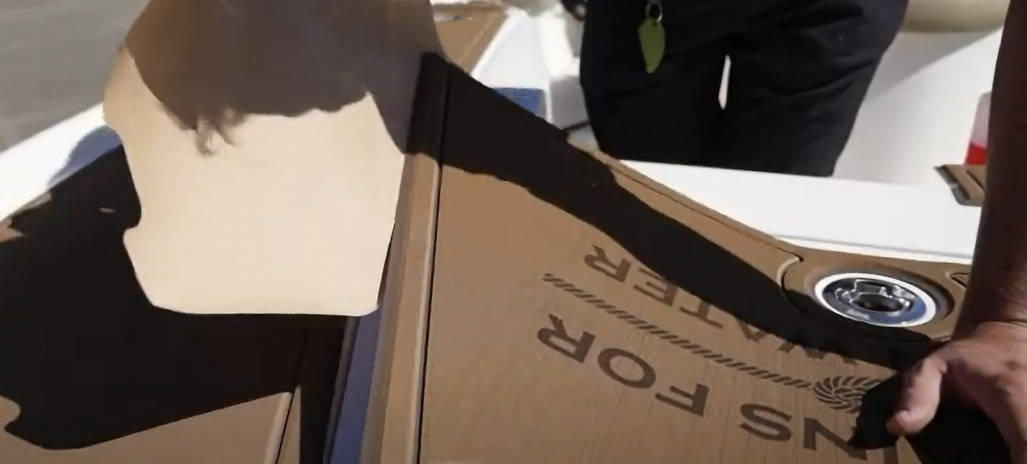
Finally, use the staged peel method: remove backing in sections, smoothing from the center outward to eliminate air bubbles. Apply firm pressure with a roller to activate the adhesive properly. The pressure-sensitive backing forms a permanent bond within mere hours.
For custom applications, SeaDek installation services ensure professional results with precise cutting and a perfect fit.
Maintenance & Lifespan Strategies
Of course, different non-skid decking materials require specific (and quite different) care approaches:
Paint-based surfaces:
- Weekly: Fresh water rinse and soft brush cleaning
- Monthly: Deep clean with marine detergent
- Annually: Inspect for wear and touch up as needed
EVA foam materials:
- After each use: Quick rinse to remove salt and debris
- Weekly: Proper SeaDek cleaning with appropriate cleaners
- Seasonally: Inspect edges and high-wear areas
|
? Temperature management: Avoid dark colors in high-sun environments—they can become uncomfortably hot. Light grays and traditional marine colors balance aesthetics with comfort. |
Common Mistakes
Over-coverage syndrome: Covering every square inch with aggressive texture not only looks rather amateur, but also feels uncomfortable. Professional installations balance traction areas with smooth transitions.
Skipping surface prep: Paint and adhesive failures almost always result from inadequate cleaning. To that end, remove every trace of wax before any installation.
Choosing inappropriate grit: Super-aggressive textures tear skin, snag fishing lines, and damage equipment. Always match texture to your specific use patterns.
Your Path to Safer Boating
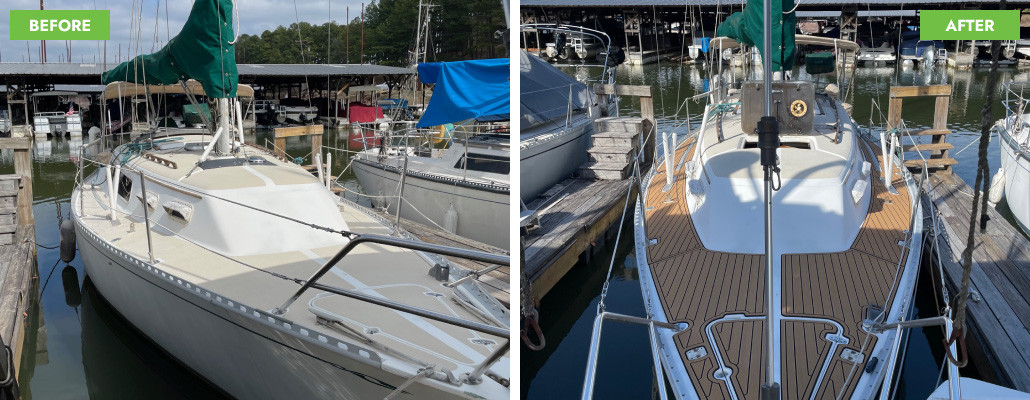
A slippery boat doesn't have to stay that way. You can choose paint, foam, or other solutions; either way, the key is matching the right material to your specific requirements and installation techniques.
Ready to eliminate a slippery boat deck for good? Check out SC Wake's custom SeaDek solutions and see how professional-grade non-skid decking transforms boat safety and comfort on the water.
Frequently Asked Questions
What's the best material for boat deck applications in saltwater?
SeaDek handles saltwater exposure far better than paint solutions. Its closed-cell construction prevents salt crystal buildup that can damage other materials. The foam's molecular structure resists UV degradation and maintains flexibility even after years of exposure to harsh marine conditions.
How long does a non-skid boat deck installation typically take?
Paint applications require 2-3 days, including cure time. SeaDek installations can be completed in a single day for most boats. However, custom templating and complex multi-piece installations may extend the timeline depending on weather conditions and surface preparation requirements.
Can I install non-slip boat mats over existing textures?
Yes, but surface preparation is important. Smooth down any sharp edges that might puncture backing materials. The existing texture should be thoroughly cleaned, and any loose particles removed. Some installers use primer coats over heavily textured surfaces.
What's the difference between non-skid decking and anti-slip mats? Permanent non-skid decking integrates with your boat's design, while temporary mats can be moved or removed. Choose based on your ownership timeline and customization needs. Permanent installations offer better water sealing and a more professional appearance.
How do I maintain grip performance on my slippery boat deck over time?
Regular cleaning prevents buildup that reduces traction. Different materials have specific maintenance requirements; EVA foam, for example, needs gentler care than textured paints (although it is quite tough). Avoid bleach or harsh solvents. Weekly fresh water rinses remove salt deposits that create slippery films.
Will non-skid deck improvements affect resale value?
Quality installations typically improve value, especially when buyers see evidence of safety upgrades and professional installation. However, highly personalized color schemes may not appeal to all buyers. Neutral colors tend to have broader market appeal overall.